
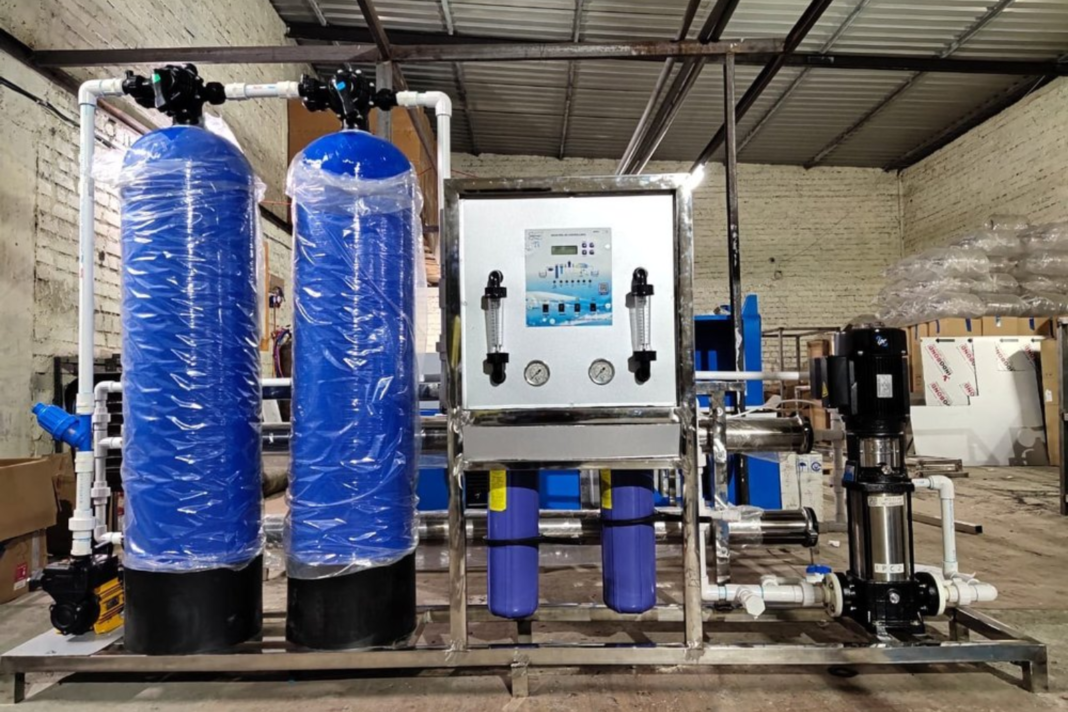


Most of us don’t spend much time thinking about what’s inside a water filter.
We install it, maybe replace it when needed, and trust that it’s doing its job. Clean water in, cleaner water out—that’s the expectation. Simple enough.
But if you pause for a moment and look a little closer, there’s a whole world inside that system. Materials, layers, media types—each playing a specific role in shaping the water you use every day.
And once you understand that, even just a little, it changes how you think about filtration altogether.
It’s Not Just a Filter—It’s a Process
We often talk about “filters” as if they’re single things. One unit, one function.
In reality, filtration is a process. Water passes through different stages, and each stage targets something different—particles, chemicals, odors, even microscopic contaminants.
That’s where filter media options come into play.
These are the materials inside the system that actually do the work. Sand, gravel, carbon, resins… each one designed for a specific purpose. And the combination you choose can dramatically affect the outcome.
It’s a bit like cooking, in a way. The ingredients matter, but so does how they’re used together.
Why One Size Rarely Fits All
Here’s something that often gets overlooked—water isn’t the same everywhere.
In some areas, it’s heavy with minerals. In others, it might carry chlorine or organic compounds that affect taste and smell. Sometimes, it’s a mix of issues that require a layered approach.
So when people ask, “What’s the best filter?” the honest answer is… it depends.
Because the “best” setup is the one that matches your specific water profile. Not someone else’s. Not a generic recommendation.
And that’s why understanding the role of different media types becomes so useful.
The Quiet Power of Carbon
If there’s one material that comes up again and again in water filtration, it’s carbon.
More specifically, activated carbon media.
It might not sound particularly exciting, but it plays a huge role in improving water quality. It’s especially effective at removing chlorine, reducing odors, and improving taste.
And the way it works is fascinating—it doesn’t just block contaminants, it absorbs them. Almost like a sponge, but on a microscopic level.
That’s why water treated with carbon often feels… different. Cleaner, softer on the palate, more neutral.
It’s one of those changes you notice without really knowing why.
Layering Solutions for Better Results
In many systems, carbon isn’t working alone.
It’s paired with other media—sediment filters to catch larger particles, resins to soften water, sometimes even specialized materials for iron or sulfur removal.
Each layer builds on the last.
Think of it like a team effort. One layer removes the visible debris. Another targets chemical compounds. Another balances mineral content.
Individually, they’re effective. Together, they create a more complete solution.
Maintenance: The Part That Keeps It All Working
Of course, even the best media doesn’t last forever.
Over time, it becomes saturated or worn out. And when that happens, performance starts to drop—sometimes gradually, sometimes more noticeably.
That’s why maintenance matters.
Replacing media at the right time isn’t just about keeping things running—it’s about maintaining the quality you’ve come to expect.
And while it might feel like a small task, it has a big impact.
Choosing Without Overcomplicating Things
Let’s be honest—once you start looking into filtration systems, it can feel a bit overwhelming.
There are so many options. So many technical terms. It’s easy to feel like you need to understand everything before making a decision.
But you don’t.
Start with your experience. What are you noticing? Taste issues? Odor? Buildup?
Those clues are more valuable than you think.
From there, you can narrow down what kind of media might help. And if you’re working with a knowledgeable provider, they can guide you without turning it into a technical deep dive.
The Subtle Changes That Make a Difference
What’s interesting about filtration is how subtle the changes can be.
You might not wake up one day and think, “Wow, this is completely different.”
Instead, it’s gradual.
Your water tastes better. Your appliances seem to run more smoothly. You don’t notice that lingering smell anymore.
And over time, those small improvements become your new normal.
A Different Way to Look at What’s Inside
We tend to focus on what we can see—the tap, the glass, the flow of water.
But what’s happening inside the filter? That’s where the real transformation takes place.
And while it might not be visible, it’s incredibly important.
Because those materials, those layers, those carefully chosen media types—they’re what turn ordinary water into something better.
A Final Thought Worth Keeping
You don’t need to become an expert in filtration to make good decisions.
But understanding that there’s more to it than just “a filter” can go a long way.
It helps you ask better questions. It helps you recognize what matters. And it helps you appreciate the system you rely on every day.
Because in the end, it’s not just about what comes out of your tap.
It’s about everything that happens before it gets there.