


There’s something strangely comforting about construction sites. Maybe it’s the hum of machinery, the steady chatter between workers, or that quiet moment at sunrise when the site feels like it’s holding its breath before another day begins. But behind every busy site, behind every wall framed perfectly and every concrete pour timed just right, there’s one thing quietly guiding it all — the schedule.
Not the dusty stack of papers taped inside a site trailer. Not the outdated spreadsheet nobody opens after week two. But the actual living, breathing plan that keeps people aligned, materials arriving on time, and milestones ticking forward. When it’s done well, you can feel it on the site — the work flows smoother, confusion shrinks, and the entire project feels more predictable.
And when it’s not done well… well, you’ve probably seen that too. Delays snowball. Costs swell. Everyone ends up pointing in different directions.
That’s why understanding — and appreciating — a solid construction schedule has become such an essential part of modern building.
Why Construction Schedules Matter More Than Most People Think
A schedule isn’t just a timeline. It’s the spine of the entire project. It tells crews where to be, when materials need to arrive, which subcontractors overlap, and what has to happen before the next big step can begin. It’s the difference between controlled progress and daily firefighting.
You’ve probably seen projects where everything just clicks — people show up, work moves, and bottlenecks don’t ruin anyone’s day. Those are rarely accidents. They’re the result of strong planning, steady updates, and a schedule treated as a living document instead of a one-time formality.
The funny thing? A great schedule doesn’t look flashy. It’s simple, clear, and honest about what it needs to communicate. But behind its simplicity sits a mountain of coordination.
Seeing the Whole Project Like a Story Unfolding
One of the biggest strengths of a well-made schedule is perspective. You’re not just looking at today’s tasks — you’re watching a story unfold from foundation to finishing touches.
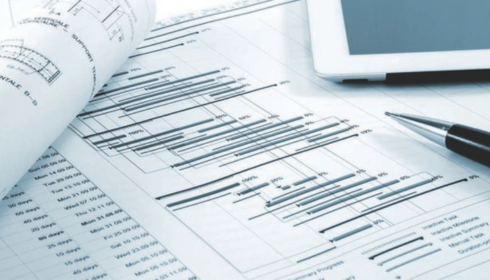
That’s why people love looking at a construction project schedule example when they’re new to the industry. These examples show something most beginners don’t realize: construction isn’t chaos. It’s a sequence. A domino line where each tile has a job, a place, and a moment.
You can literally see how:
- Site prep unlocks excavation
- Excavation unlocks foundation work
- Foundations unlock framing
- Framing unlocks MEP rough-ins
- Rough-ins unlock drywall
- Drywall unlocks finishes
It’s like watching a video of a building rising — except someone paused it and marked every step.
Real Schedules Aren’t Perfect — and That’s the Point
If you’ve ever tried planning a project to the minute, you already know how unrealistic that is. Real schedules change constantly. A rainstorm hits. A truck gets stuck. A permit takes an extra day. A subcontractor loses workers to another big job.
But construction scheduling isn’t about predicting perfection. It’s about building flexibility into a structure that still holds up under pressure.
The best schedules don’t pretend everything will go perfectly. They make sense of what actually happens on-site. They give teams room to breathe, adjust, and adapt — without losing momentum.
Sometimes the most valuable part of a schedule isn’t what’s written on it, but how easily it can evolve.
A Simple, Human-Friendly Look at How Schedules Work
Forget complicated diagrams for a minute. A good construction schedule example can be as straightforward as a list of phases with dates attached. Something like:
- Week 1–2: Site Clearing & Prep
- Week 3–5: Excavation & Footings
- Week 6–9: Foundation Walls
- Week 10–15: Framing
- Week 16–20: Roofing, Windows, Exterior Sheathing
- Week 21–26: Mechanical, Electrical, Plumbing Rough-Ins
- Week 27–30: Insulation & Drywall
- Week 31–36: Interior Finishes
- Week 37–40: Exterior Work & Landscaping
Not fancy. Not overly engineered. Just clear.
But in real life, each of those steps contains dozens of smaller tasks, dependencies, and coordination moments. It’s a lot like cooking a big meal — everything has to go in the right order, but you also leave space for taste-testing, adjusting, or realizing you forgot to preheat the oven.
Collaboration: The Secret Ingredient in Any Good Schedule
A schedule is only as good as the communication around it. The best ones aren’t created in isolation. They come from:
- conversations with subcontractors
- realistic assessments from site supervisors
- input from engineers
- insights from past projects
- field conditions nobody can predict
A schedule that comes from one person’s desk rarely survives in the real world. But a schedule built with the full team? That one has legs.
Construction is teamwork disguised as structure. And the schedule is where that teamwork becomes visible.
How Schedules Keep Projects on Track (Even When Life Happens)
Most delays don’t start as big disasters. They start as small slips:
- one missing delivery
- one crew delayed
- one unexpected inspection hold
But schedules help catch these small slips before they avalanche.
They show what’s connected to what. They make impacts visible. They help project managers adjust early instead of scrambling late.
A good schedule answers questions before anyone has to ask:
- “What’s next?”
- “What depends on this?”
- “How much time do we have?”
- “What happens if this gets delayed?”
That level of clarity keeps a project calm instead of chaotic.
Why Clients Love Visual Schedules
Clients aren’t usually involved in day-to-day site work, but they care deeply about progress — and they get anxious when things feel unclear.
That’s why schedules double as communication tools.
When a timeline is clean, visual, and updated, clients feel reassured. They can literally see what’s happening and what’s coming. And when delays do happen (because they always do), the conversation is easier:
“This shifts Week 15 to Week 16 because of weather, but we’re absorbing it by adjusting X and Y.”
Suddenly, the project feels controlled again — even in uncertain moments.
A Final Thought: Construction Schedules Are More Human Than You Think
At first glance, scheduling looks like math and charts. But beneath it is something much more human — understanding how people, materials, weather, communication, and timing collide to create something real.
A schedule is a plan, yes. But it’s also a promise. A shared understanding. A way of building with intention instead of improvisation.