Indian SEO Company vs Local Agency: A Fair, Unbiased Comparison for International Clients
This comparison deserves more honesty than it usually gets. Pieces written by Indian agencies tend to emphasize quality and cost efficiency with minimal acknowledgment of the genuine challenges. Pieces written by local agencies in Western markets tend to overemphasize cultural and communication gaps without fairly representing how much has changed. Neither serves the buyer particularly […]
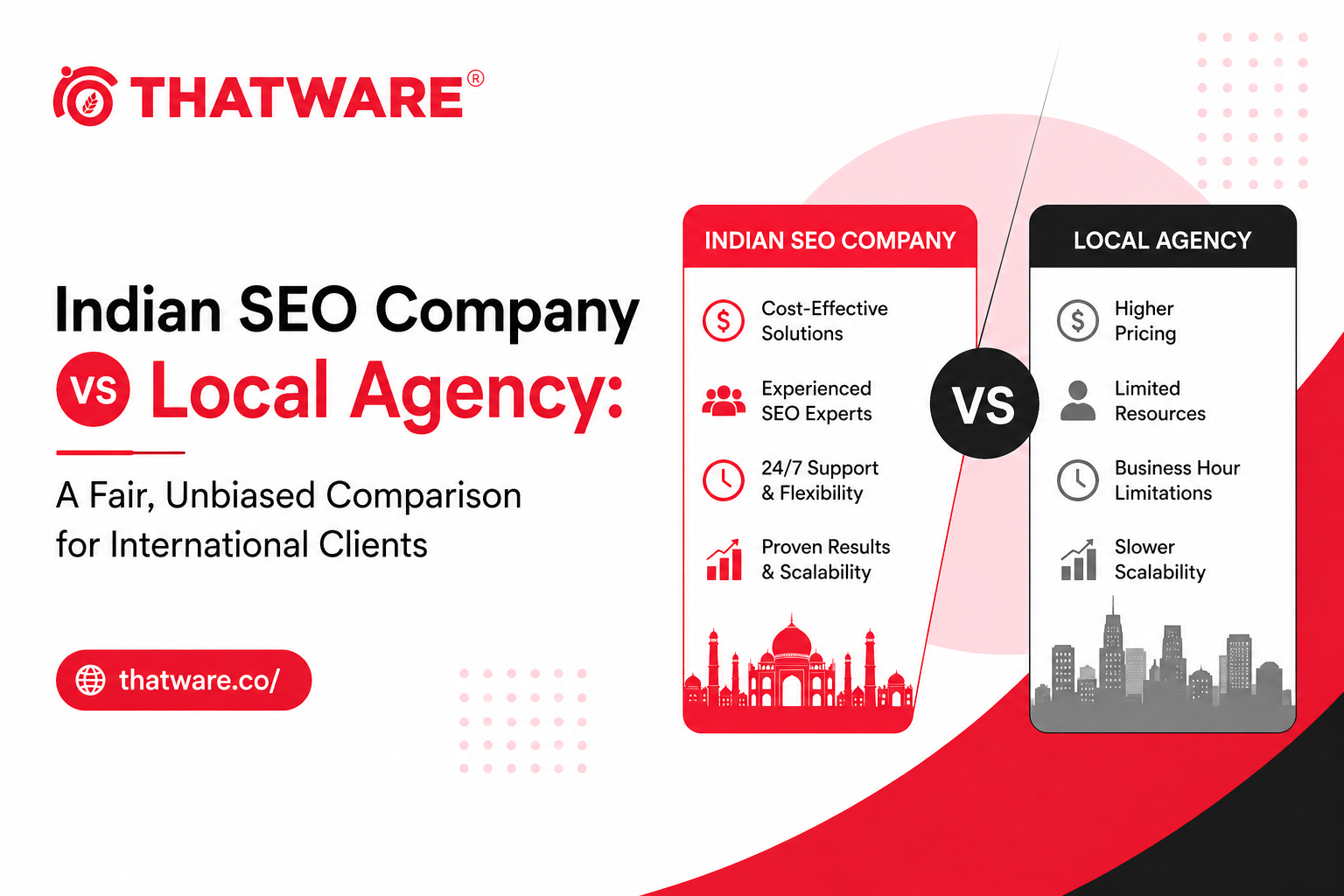
This comparison deserves more honesty than it usually gets. Pieces written by Indian agencies tend to emphasize quality and cost efficiency with minimal acknowledgment of the genuine challenges. Pieces written by local agencies in Western markets tend to overemphasize cultural and communication gaps without fairly representing how much has changed. Neither serves the buyer particularly well.
Here’s an attempt at the comparison that a well-informed advisor would actually give you.
Where Indian SEO Companies Have Genuine, Measurable Advantages
Cost is the obvious one, and it’s real. The differential between what you can access from a well-run Indian SEO agency and what you’d pay for comparable quality at a domestic agency in the UK, US, or Australia is typically two to four times. This isn’t a minor efficiency. It changes what’s possible within a budget.
At the same budget level, an Indian agency engagement often allows for significantly more content production volume, more comprehensive technical coverage, more systematic link building activity, and more thorough reporting infrastructure than a domestic agency at the same price point. For businesses where content velocity matters, this is a meaningful strategic advantage.
Technical SEO depth is a genuine strength at the top tier of Indian agencies. The combination of strong engineering education infrastructure and years of working with technically demanding international clients has produced practitioners with real depth in crawl optimization, JavaScript rendering, international SEO implementation, and large-scale technical auditing.
Data analysis and reporting sophistication has also become a strength. The quantitative background of many Indian agency practitioners translates into more rigorous performance measurement frameworks than many domestic agencies provide.
Indian seo company providers at the higher end of the market are competitive with their domestic counterparts on pure technical and analytical capability. The quality gap that existed a decade ago has substantially closed.
News context Buying Appliances That Actually Make Life Easier: A Thoughtful Approach for Real Homes
Where Local Agencies Retain Real Advantages
Cultural fluency in highly localized content is the most defensible advantage for domestic agencies. Content that needs to feel authentically local, that references specific cultural touchpoints, that reads as if written by someone embedded in the market, is harder to produce from a distance. For some content types and some markets, this matters significantly. For others, it’s largely irrelevant.
Real-time collaboration for clients who need frequent, informal interaction is genuinely easier with same-timezone agencies. Video calls, quick Slack exchanges, in-person meetings when needed. For clients whose working style involves intensive ongoing collaboration, proximity has real value.
Relationships with specific local media and publications for PR-driven link building can be a genuine advantage for domestic agencies that have invested in those relationships over years. These relationships are difficult to replicate from offshore and matter for specific link building strategies.
For regulated industries with complex country-specific compliance requirements, the baseline familiarity that domestic agencies have with local regulatory context has value, though it’s not insurmountable for offshore agencies working with clients in those industries long-term.
The Factors That Often Get Overweighted
Language quality gets cited as a major domestic agency advantage far more than it deserves to be in 2026. At the top tier of Indian agencies, English quality is excellent. The agencies that work with international clients have invested in editorial infrastructure accordingly. If you’ve had bad experiences with low-quality English content from offshore providers, you’ve encountered the wrong tier of provider, not an inherent limitation.
Communication difficulty is also often overweighted. Yes, asynchronous communication across time zones requires process discipline. But for most professional SEO work, the rhythm of briefing, production, review, and reporting is perfectly manageable asynchronously. Clients who have built the working model describe it as less friction than they expected.
Seo company india providers at the professional tier have solved the communication challenge many times over. It requires the right processes, not geographic proximity.
Business context Recruitment Agency in Mohali, Placement Agency in Noida – Your Trusted Partners for Smarter Hiring
How to Make the Decision
A few questions clarify which direction is right for your situation.
What’s your content type? Highly localized, culturally specific content for a deeply domestic audience benefits more from domestic agency proximity. Content for broader audiences on topics that aren’t culturally specific is produced equally well from India by the right agency.
What’s your collaboration style? If your team needs constant real-time interaction and informal check-ins, domestic proximity reduces friction. If your team works well with structured check-ins and asynchronous communication, offshore works fine.
What’s your budget constraint? If budget is a real constraint, the Indian agency at the top of your budget range is often better than the domestic agency at the same price point. If budget allows for the best domestic option, the comparison is closer.
What’s your industry? Regulated industries with complex compliance requirements and those needing deep local media relationships have more reason to consider domestic. Most other industries don’t.
The honest answer is that neither option is universally better. For many international clients, especially those with clear budgets and manageable collaboration requirements, a top Indian SEO agency is the right choice. For others, domestic presence matters enough to justify the premium. Knowing which situation you’re in is the starting point.